
Contributes to testing and awareness of hepatitis B
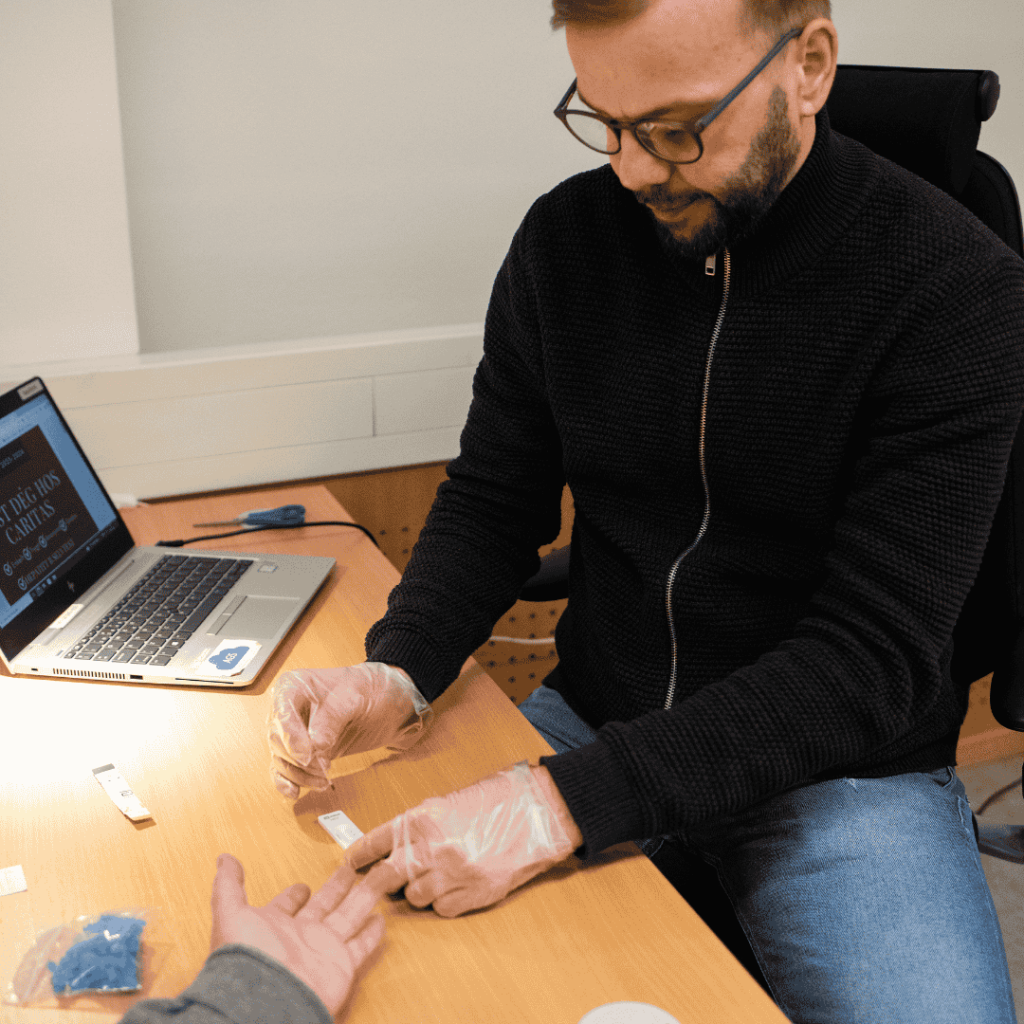
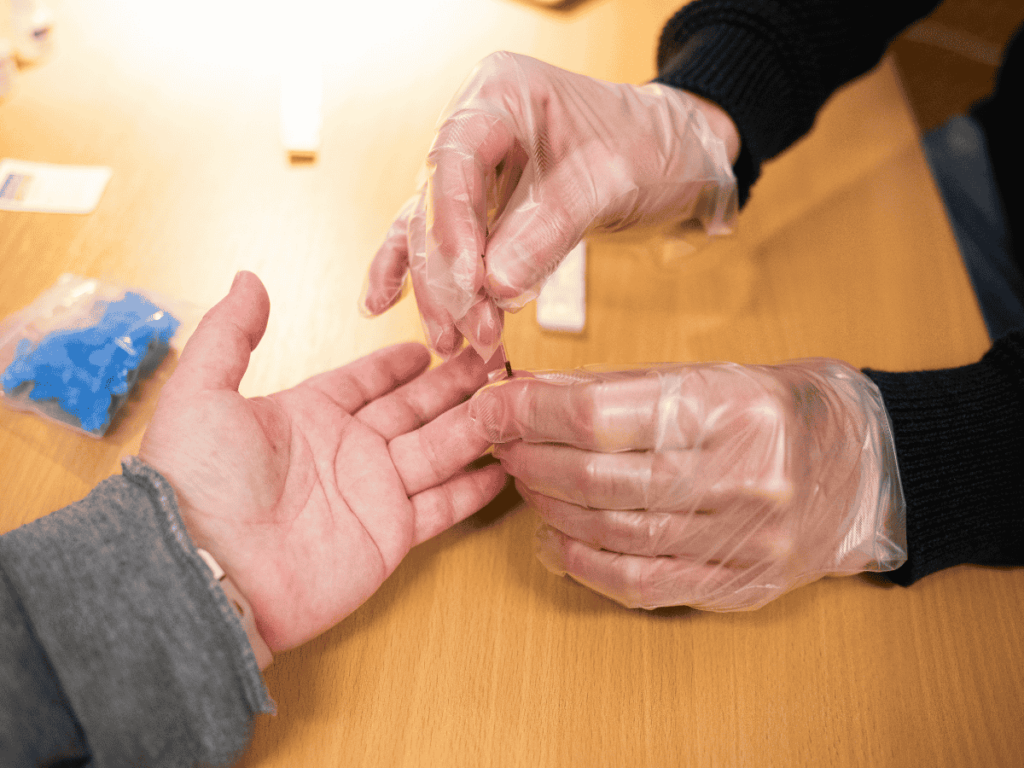
Since 2023, Caritas and our volunteers have helped over 500 people get tested for hepatitis B. In addition, over 5,000 people have received information about the disease in a language they understand.
Hepatitis B is a virus that can cause cirrhosis and liver cancer if not detected and treated in time. Worldwide, there are over 250 million people living with chronic hepatitis B, and the vast majority of these do not know they are infected.
The goal of our project, carried out in collaboration with Oslo University Hospital (OUS), has been to increase knowledge about the disease among immigrant groups from countries with a high incidence. And to increase the number who are tested and referred to specialist health services when necessary. Here, the general practitioners and hepatitis researchers Asgeir Johannessen and Dag Henrik Reikvam have contributed facts, equipment and follow-up of those who tested positive.
Increased knowledge and safe referral
– The project has shown how targeted and inclusive public health work can make a big difference. Through low-threshold services, multilingual guidance, peer work and close follow-up, we have not only reached a vulnerable target group – we have also contributed to increased knowledge, early detection of disease and safe referral for further treatment.
The project manager says: Caritas Norway, Martine Skoglund Fosen, and adds:
– An important success criterion has been that our volunteers speak a number of different languages. This has made it possible to convey information about hepatitis B in a way that is both understandable and culturally appropriate. Many of the participants have expressed that for the first time they truly understood what the disease is, how it is transmitted and why it is important to get tested.

More positive ripple effects
The results of the project clearly show that there is a great need for information and testing among immigrants from areas with a high prevalence of hepatitis B, and that trust and accessibility are key factors for success.
– Many of the participants have expressed gratitude for having learned about their health status and for having been met with respect and understanding, says Skoglund Fosen.
According to the researchers, the project has also had ripple effects beyond the measurable – it has helped to break down stigma, strengthen health-promoting attitudes, and build bridges between health services and immigrant communities.
– For us, this collaboration has been both useful and inspiring. Caritas has a completely different opportunity to reach immigrant groups than we have in hospitals. We are impressed by the enthusiasm we have met with the volunteers at Caritas , say Johannessen and Reikvam.
Can be inspiring
– This shows that low-threshold health information and testing is an important tool in the work to reduce health disparities and promote public health, says the project manager in Caritas .
Our experience shows that it is possible to establish close collaboration between voluntary organizations and specialist health services to ensure assessment and treatment of hepatitis B, as well as necessary health services for people who are often not covered by the GP scheme.
We hope that the results from the project can be inspiring in dealing with other chronic diseases with a high incidence in immigrant groups, concludes Martine Skoglund Fosen.